
Market Basics · Lesson 6 of 40
Brokers and Trading Accounts: Cash vs Margin
What a broker does
A broker is the company that connects you to the market. You don't call the NYSE or the CME directly — you open an account with a broker, and the broker routes your orders to the exchange, holds your funds, tracks your positions and sends you statements. In exchange, the broker charges fees: commissions per trade, or a spread markup, or both. The broker is also your counterparty on margin: when you trade with leverage, the broker lends you the buying power and holds your margin as collateral. This is why broker choice is a safety decision, not just a price decision. If the broker collapses or runs off with client funds — it has happened, including in crypto — your positions and money can vanish with it. Regulated brokers in major jurisdictions (US, UK, EU) are required to keep client funds separate and are insured to a degree. For crypto futures, check the exchange's track record and proof of reserves before depositing a single dollar.
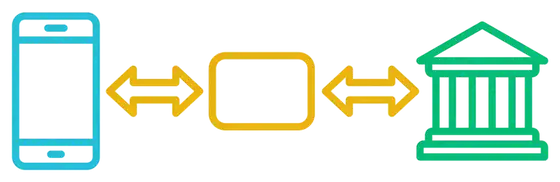
Broker types
Brokers come in flavors. Full-service brokers give you advice, research and a human to call — and charge heavily for it; fine for wealthy investors, usually wrong for active traders. Discount brokers execute your orders cheaply without advice — this is the standard for self-directed traders. Direct-access brokers connect you straight to the market with advanced tools, popular with day traders. Futures brokers specialize in the futures world: they know margin rules, contract specs and platforms designed for futures. Crypto "brokers" are usually exchanges: you create an account, deposit, and trade directly on their matching engine — no human, no phone line. For a beginner with a demo account, the type matters less than the essentials: reasonable fees, a solid platform, reliable withdrawals, and regulation where you live. Everything else is marketing. A final note: the cheapest broker is not automatically the best — a broker that saves you 0.01% per trade but disconnects during a news spike can cost you 2% in one bad fill. Price matters; reliability matters more.
Cash vs. margin account
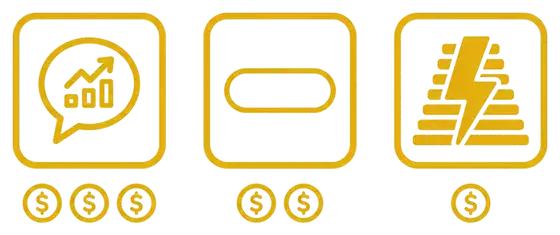
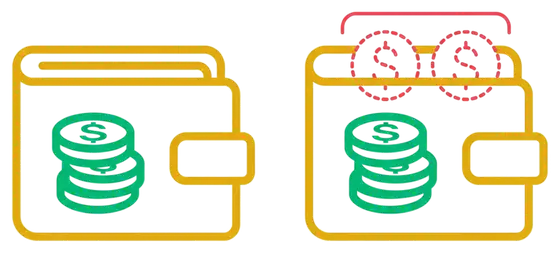
The account type determines what you can do. A cash account only lets you trade with money you actually have: buy 1,000 USDT of BTC with 1,000 USDT — done. Simple, no debt, no liquidation risk, but also no leverage. A margin account lets the broker lend you buying power: with 10,000 USDT and 10× margin, you can open positions worth 100,000 USDT. The upside: much bigger returns on the same capital. The downside: margin is a loan, and loans have rules. If the position moves against you, the broker demands more collateral (a margin call), and if you can't provide it, they liquidate the position — often at the worst possible price. A concrete picture: 10,000 USDT, 10× leverage, long BTC. Price falls 10% — your position loses 10,000 USDT, exactly your entire margin. The exchange closes you out; your account is at zero. The same 10% drop on a cash account is just a 10% loss you can survive. For futures and crypto perpetuals, margin is built into every position, so the "margin account" question is really "how much leverage will you use". The demo app is exactly the right place to learn how margin behaves before real money is involved.
What to look for
Choosing a broker is like choosing a bank: you're trusting them with your capital, so verify before you commit. Fees: check commissions, spreads and withdrawal costs — calculate what 100 round-trip trades would cost you, and compare. Platform: can you do everything you need — charts, limit orders, TP/SL, OCO — without fighting the interface? Data: are prices real-time or delayed? Delayed data on a fast market is a slow-motion accident. Regulation: is the broker licensed in a serious jurisdiction? A license number is not a guarantee, but its absence is a huge red flag. Withdrawals: how long does it take to get your money out? Support: if your account freezes at midnight on a Friday, will anyone answer? Finally, the demo test: put a broker through a week of demo trading with a fake plan, and judge the experience as a customer, not a fan. The right broker disappears into the background; the wrong one shows up in every statement.
Security basics
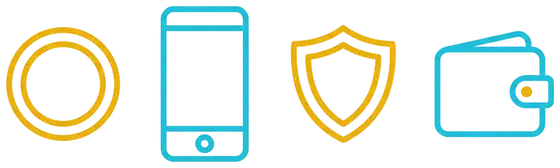
Before any deposit, set up basic security — it's five minutes that can save you years. Two-factor authentication (2FA): mandatory, on every exchange, for logins and withdrawals — a password alone is not protection. Withdrawal whitelist: many exchanges let you lock withdrawals to a list of pre-approved addresses; enable it so a stolen session can't drain you. Keep most funds in cold storage (a hardware wallet) if you hold crypto long-term, and only keep trading amounts on the exchange. Beware of phishing: check the URL, bookmark the real site, and never enter your keys after clicking a link from a message — the "your account is suspended" email is the oldest trick in the book. And the most overlooked rule: never share your recovery phrase with anyone, ever — no support agent, no "verification bot", no "airdrop" site. Legitimate services never ask for it. The demo app is the safe place to learn the routine: enable every security feature it offers, and practice the habit of checking where your funds go.
The demo account is your first "broker"
Before you pick a real broker, your first trading environment is the demo account — and that's deliberate. The demo gives you the full experience: real prices, real order types, real margin mechanics, real emotions (yes, demo losses still sting). What it doesn't give you is real money risk — which is precisely why it's the best training ground ever invented. Use the demo like a real account: set a starting balance, treat it as your actual capital, apply the 1% rule, keep a journal, and "withdraw" your profits on a schedule. Traders who treat demo seriously develop habits that survive contact with real money; traders who treat demo as a video game usually blow up their first real deposit in weeks. A good benchmark: only move to real money when you've had two consecutive profitable demo months with at least 50 trades, following your written rules. If you can't be profitable with fake money, real money won't change the math — it will only change how much it costs to learn.
Quiz: test yourself
8 questions from the lesson. Tap an answer to check it.
-
What is the main job of a broker?
-
With 5,000 USDT in a margin account and 20× leverage, what is the maximum position you can open?
-
What happens if you can't cover a margin call?
-
Which habit is the best reason to take the demo account seriously?
-
You have 10,000 USDT, use 10× leverage and go long BTC. The price falls 10%. What happens?
-
What is the main feature of a cash account?
-
Which setting protects your funds if someone steals your logged-in session?
-
Someone from "support" asks for your recovery phrase to verify your account. What do you do?
Educational content only, not financial or investment advice. Trading involves risk; all trading in Trade Dojo uses virtual money. More Market Basics lessons · All lessons