
Futures & Derivatives · Lesson 38 of 40
Leverage and Margin Explained: Liquidation Price
What leverage really is
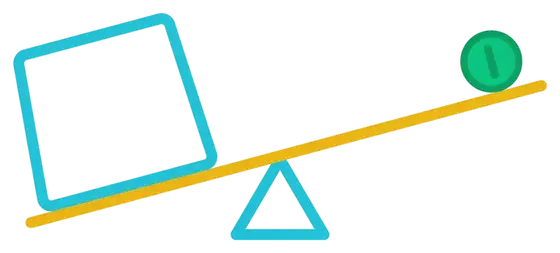
Leverage is the multiplier between your money and your position. With 10× leverage, 5,000 USDT of margin controls a 50,000 USDT position. The promise: every 1% the price moves in your favor earns 10% of your margin. The price: every 1% against you loses 10% of your margin. Leverage does not create profit — it amplifies whatever the market does, and it amplifies mistakes exactly as much as it amplifies wins. The honest framing: leverage is a loan of buying power from the exchange, and like every loan, it has terms, costs and a default point. The exchange isn't your partner in profits — it's a lender that protects itself. When the market moves against your leveraged position far enough, the exchange doesn't wait for you to decide: it closes you out automatically. That automatic close is liquidation, and it's the one mechanism every leveraged trader must understand completely before opening anything.
Margin: the deposit
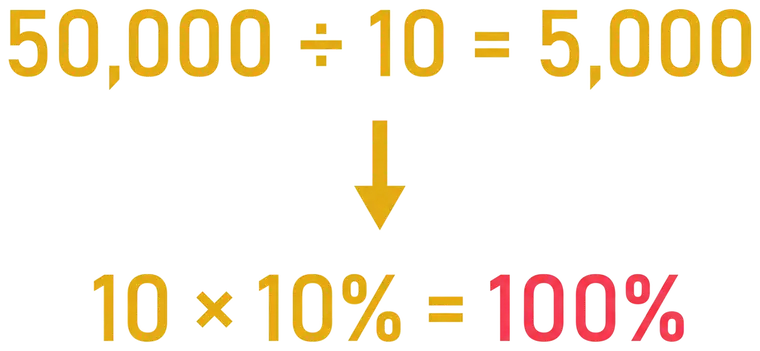
Margin is the collateral your position requires. Example: BTC at 50,000. You want 1 BTC of exposure — 50,000 USDT notional. With 10× leverage, the exchange demands 10% — 5,000 USDT — as your margin. Your position is 50,000, your deposit is 5,000, and the difference is the exchange's loan. Two kinds of margin matter: the initial margin (what you need to open) and the maintenance margin (the minimum you must keep while the position is open). As price moves against you, your equity — margin minus losses — shrinks. When equity falls to the maintenance level, the exchange issues a margin call: deposit more or face forced closure. The fatal misunderstanding beginners carry: "I'll just wait, it will come back." Waiting is not an option on a leveraged position — the exchange's timeline is not your timeline, and the liquidation happens at the market's worst moment, not at your convenience.
The liquidation price
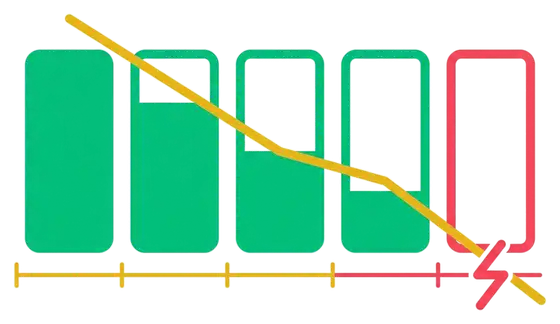
Liquidation is the moment the exchange closes your position because the losses consumed your margin. The math is direct: at 10× leverage, a 10% adverse move wipes your entire margin; at 20×, a 5% move; at 50×, a 2% move — one ordinary daily candle. The liquidation price is the level where this happens, and every serious exchange shows it to you when you open a position. The cruel detail: liquidation rarely happens at the theoretical price. In a fast move, the exchange can't exit at the liquidation level — the order book is thinner exactly when everyone is being liquidated at once, so the actual fill is often worse, sometimes much worse. This cascade effect is why you see those famous "liquidation walls" on the news: hundreds of leveraged positions die in the same second, feeding the move that killed them. The lesson is arithmetic: your stop loss must always sit far above your liquidation price. If your stop is closer to entry than your liquidation price, you're trading with a safety net you control; if the reverse, the exchange controls your exit.
Isolated vs. cross margin
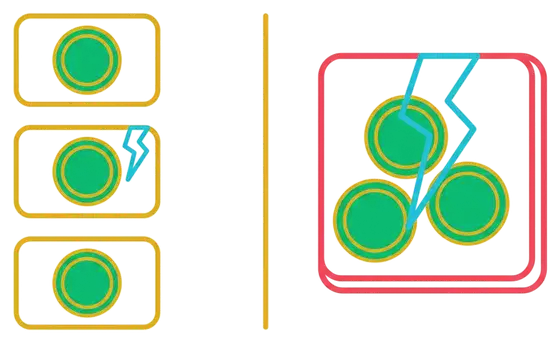
When you open a leveraged position, you choose where the margin comes from. Isolated margin: the position gets its own dedicated margin — if this trade gets liquidated, only that margin is lost, and the rest of your balance is untouched. Cross margin: the entire balance backs the position — losses can draw on all your funds, which means liquidation is slower to trigger but can eat the whole account if it finally happens. For a beginner, the choice is clear: isolated, always. It caps the damage of a single trade at a known number, which is exactly how the 1% rule works — the risk of the position is contained before you open it. Cross margin looks friendlier ("more room to breathe") but it converts a position's problem into an account's problem, and the account always loses that argument. Professionals use cross margin deliberately, with full accounting of every open position; beginners use it by accident, and the accident is usually expensive.
Keeping leverage under control
The leverage the exchange offers — 50×, 100×, even 125× on crypto — is a marketing number, not a recommendation. The professional relationship with leverage: choose the smallest leverage that lets your stop loss sit where the chart demands, with a buffer to spare. Revisit the sizing formula: account 10,000, risk 1% = 100 USDT, stop distance 2% → position = 5,000 USDT. On a 10,000 account, a 5,000 position needs no leverage at all! The formula simply doesn't require it. Leverage becomes necessary only when the chart demands a stop so tight that the position would otherwise be too small — and even then, 2×–5× covers almost every legitimate setup. High leverage is the tell of an oversized position: if your setup "needs" 50×, it's because your position is 50 times too big for your risk rule. The demo app shows you the liquidation price on every ticket — make it a habit to check that your stop is always closer than your liquidation line.
Quiz: test yourself
8 questions from the lesson. Tap an answer to check it.
-
BTC is at 50,000. You open 1 BTC with 10× leverage. What is your margin?
-
At 20× leverage, what percentage move against you wipes your margin?
-
What is the difference between isolated and cross margin?
-
Your stop loss is farther from entry than your liquidation price. What does that mean?
-
You use 10× leverage and the price moves 1% in your favor. What happens to your margin?
-
What is the maintenance margin?
-
At 50× leverage, roughly how big an adverse move wipes out the margin?
-
Account 10,000 USDT, risk 1%, stop 2% away — the formula gives a 5,000 USDT position. How much leverage does it need?
Educational content only, not financial or investment advice. Trading involves risk; all trading in Trade Dojo uses virtual money. More Futures & Derivatives lessons · All lessons