
Strategies · Lesson 28 of 40
How to Build Your Own Trading System
Discretionary vs. mechanical
A trading system is a set of written rules that answer four questions before every trade: what to enter, when, where the stop goes, and how much to risk. There are two families. Discretionary systems keep the human in the loop: the rules define the framework (trend, levels, triggers), but the trader applies judgment to each setup. Mechanical systems remove the human: every condition is defined so precisely that two different people following the rules make identical trades. The honest truth for beginners: full discretion without rules is not a system — it's a mood, and moods are terrible traders. Start closer to the mechanical side: write the rules so specifically that a stranger could follow them, and keep the judgment only where rules can't go (which setups are worth the risk today, given the news and the regime). The written rules are the point — the moment you write them down, you can test them, and the moment you can test them, you can improve them.

Two classic families
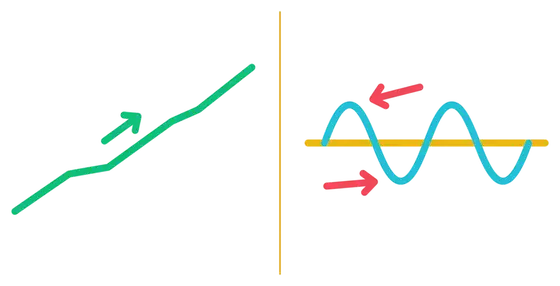
Most systems belong to two families. Trend-following systems ride the trend: enter when the trend confirms (breakout above a range, MA cross with structure), ride until it breaks, and accept that they lose small and often, win rarely and big — the math of trend following is the math of the 1:3 trades from the previous courses. Breakout systems are the trend family's sharper cousin: enter on the break of a defined level (range high, flag, cup handle), stop beyond the level, target a measured move — they work when markets trend and get chopped in ranges. The countertrend family exists too (buy oversold at support, fade extremes), but it's harder: catching falling knives requires perfect timing and accepts the worst risk profile. For a first system, the trend family is the honest recommendation: it aligns with every lesson so far — trend, levels, R:R — and its failures are small and predictable. Master the boring family first; the exotic ones will still be there.
Backtesting: honest and dishonest
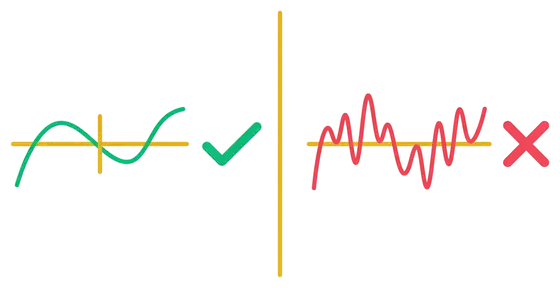
Backtesting means running your rules through history to see how they would have performed. The honest version: define the rules first, apply them mechanically to a long history (years, not weeks), count every signal — winners, losers, and the streaks in between — and record the results with costs included. The dishonest version is what most beginners do: test a rule, see it fails, tweak it until it passes, repeat — until the rules are a perfect description of the past that will never work in the future. That's overfitting: fitting the noise. The tells: a system that wins 90% of trades, or that "never" has a losing month, or that needs more than a few parameters — all suspicious. The honest yardstick: at least 50–100 trades in the test, results that survive small changes to the rules, and a maximum drawdown you could actually sit through. A system that backtests at 40% wins with 1:3 R:R is believable; one that wins 95% is a confession.

The journal: the only truth
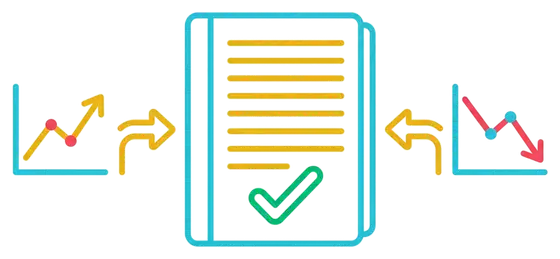
The trading journal is where the system meets reality. Record every trade: the date, the instrument, the setup, the entry/stop/target, the size, the result, and — most importantly — whether you followed the rules. After 30–50 entries, the journal answers the questions no feeling can: what is my real win rate? What is my average winner vs. average loser? Which setups actually make money and which just feel good? The expectancy formula: (win rate × average win) − (loss rate × average loss). If that number is positive, you have a business; if negative, you have an expensive hobby, and the journal tells you which parts to fix. The deeper value is honesty: the journal catches the trades you "forgot" to record because they broke the rules, and those are exactly the ones that matter. In the app, start the journal today — even the demo trades. Thirty boring entries from now, you'll know more about your trading than most people learn in years.
Quiz: test yourself
8 questions from the lesson. Tap an answer to check it.
-
A system wins 40% of trades with an average win of 300 USDT and an average loss of 100 USDT. What is the expectancy per trade?
-
What is overfitting in backtesting?
-
Why must costs be included in every system calculation?
-
What does the trading journal reveal after 30–50 trades?
-
What is a mechanical trading system?
-
A backtest shows 95% winning trades and no losing month. What does that most likely mean?
-
On a 10,000 USDT account, you make 100 trades at 5 USDT round-trip cost each. What share of the capital do the costs eat?
-
How do trend-following systems typically win and lose?
Educational content only, not financial or investment advice. Trading involves risk; all trading in Trade Dojo uses virtual money. More Strategies lessons · All lessons