
Strategies · Lesson 30 of 40
Day Trading for Beginners: Styles, Rules, Risks
What day trading is
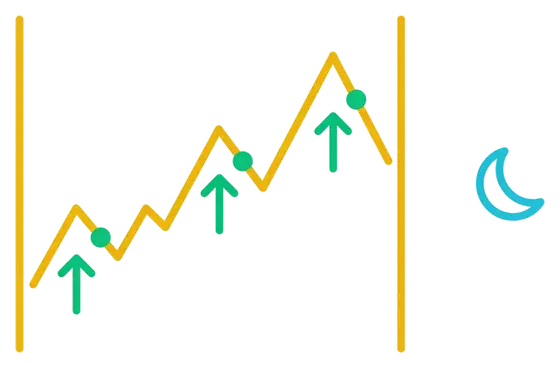
Day trading means opening and closing every position within the same session — nothing survives the night. The appeal is concrete: no overnight gaps, no weekend risk, no wondering what the chart will look like tomorrow morning; the day's work ends when the session ends. The price of that freedom is intensity: decisions happen in minutes, the costs of every trade are proportionally bigger, and the skill set is different — day trading rewards speed, discipline and routine more than deep analysis. It also demands more of your psychology: with many trades per day, one emotional mistake is a bigger share of the daily result than a swing trader's single error. And the honest warning: most day traders lose money, not because day trading is impossible, but because it amplifies the beginner's mistakes — overtrading, chasing, no plan — at ten times the speed. The demo account is the only acceptable place to learn this style, and even there, only after the swing basics are solid.
Two day-trading styles
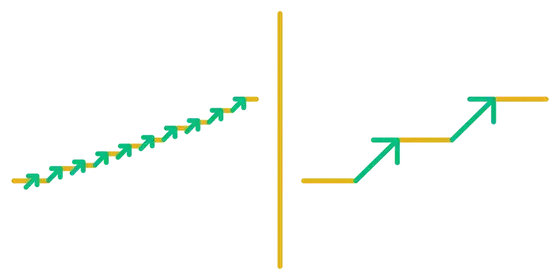
Day trading splits into two families. Scalping: dozens of trades a day, seconds to minutes each, tiny targets — a style where costs are the whole game, the edge is measured in fractions of a percent, and the market structure (spread, order book) matters more than the chart. Trend day trading: fewer trades — one to five a day — each riding a move that develops over hours, entered on the lower timeframe in the direction of the higher timeframe's trend, with the same level-and-trigger logic as swing trading, just compressed. For the beginner, trend day trading is the sane choice: it uses the analysis you already learned, gives each trade room to breathe, and keeps costs small relative to the moves. Scalping is not "more advanced" — it's a different profession with different tools, and it eats beginners alive through fees. Start with trend day trading; revisit scalping only with a documented edge and years of discipline.
The rules of the road
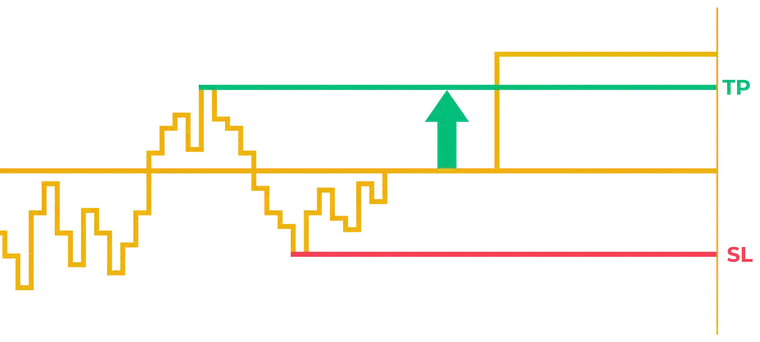
Day trading has legal and practical rails you must know before risking money. In US stocks, the pattern day trader (PDT) rule requires a minimum of $25,000 in the account to make more than three day trades in five business days — break it and the broker restricts your account. Futures and crypto have no such rule: you can day trade with a small account, which is exactly why they attract day traders. But there are still practical rails: margin and settlement rules in stocks (you can't sell shares you bought until the trade settles, in cash accounts), futures intraday margin requirements, and the exchange's own daily limits on leveraged products. The practical translation: know the rules of YOUR market before you trade it, because brokers enforce them mechanically, and the enforcement usually comes as a restriction exactly when you need to act. The demo account is the perfect place to learn the rules without the consequences.
The real risks of the short game
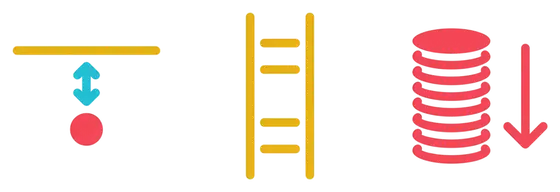
The risks that actually hurt day traders are not the ones the news warns about. Liquidity: in thin markets, your stop can fill far from its level exactly when you need it most. Slippage: around news, the price jumps through your levels and the fill comes later and worse. Costs: they scale with frequency — 20 trades a day at 2 USDT each is 40 USDT daily, 800 USDT monthly, 10% of a 8,000 account every month before a single winner. The math of frequency: with 20 trades a day, a 55% win rate is mandatory just to stay ahead of costs if your average win barely beats your average loss. And the psychological risk: day trading is a feedback machine that rewards action, and action without a plan is the most expensive habit in finance. The countermeasures are the same ones you've learned: liquid instruments only, costs calculated into every setup, and a written plan for every trade before the screen opens.
The mistakes that end day traders
The autopsy of a failed day trader's account usually shows the same five wounds. Overtrading: trading because the screen is open, not because a setup appeared — the market doesn't owe you a trade per hour. Revenge trading: losing 3% and instantly doubling the next position to "get it back" — the fastest route to zero. No plan: entering on a feeling, then improvising the exit, then hoping — a coin flip with fees. Chasing: buying after the move already ran, because it "looks strong" — the exact moment the move exhausts. Ignoring the session: trading through news, or through dead hours, with no awareness of when the market actually moves. The cure is structural: a daily trade limit (max three trades, max −3%), a written plan before every entry, and the rule that a losing day ends at the daily loss limit, not at "one more try". In the app, enforce those limits on the demo — if you can't follow them with fake money, real money will only make the lesson more expensive.

Quiz: test yourself
8 questions from the lesson. Tap an answer to check it.
-
A day trader makes 20 trades: 11 wins of 15 USDT, 9 losses of 10 USDT, and total fees of 40 USDT. What is the net result?
-
What does the PDT rule require in US stocks?
-
Why do costs matter more in day trading than in swing trading?
-
Which day-trading style is the sane choice for a beginner?
-
You make 20 trades a day at 2 USDT each, for about 20 trading days. What do the fees cost per month?
-
What is overtrading?
-
Which daily limits does the lesson recommend for a day trader?
-
Why do futures and crypto attract day traders with small accounts?
Educational content only, not financial or investment advice. Trading involves risk; all trading in Trade Dojo uses virtual money. More Strategies lessons · All lessons