
Futures & Derivatives · Lesson 39 of 40
Options Trading Basics: Calls, Puts and Theta
Calls and puts: the right, not the duty
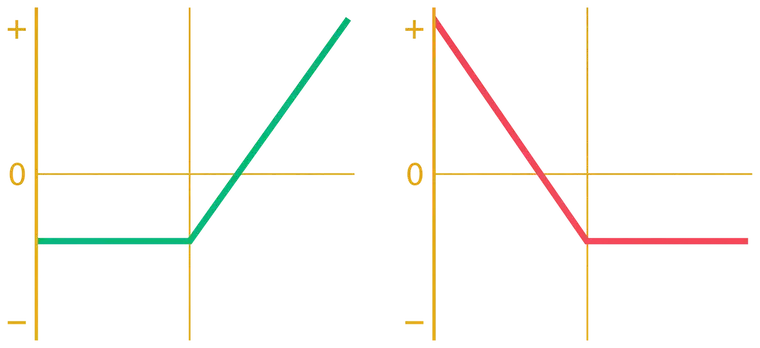
An option gives you the right — but not the obligation — to buy or sell an asset at a fixed price (the strike) until a fixed date (the expiry). A call option is the right to BUY at the strike: if the price rises above the strike, the call gains value; if not, it expires worthless. A put option is the right to SELL at the strike: it gains value when the price falls. The key word is "right": as the buyer, your maximum loss is the premium you paid — nothing more, no matter how far the market moves against you. That's the appeal: defined risk, unlimited theoretical upside. The flip side: the seller (the writer) collects the premium but takes the obligation — their risk is the mirror image, potentially unlimited. This asymmetry is the whole game of options: buyers pay for possibility, sellers get paid for taking risk. Every options trade is a negotiation between those two sides, and the price they agree on is the premium.

The premium: what you pay for
The premium is the price of the option, and it has two components. Intrinsic value: what the option is worth right now if you exercised it — a call with strike 30,000 when the price is 31,000 has 1,000 of intrinsic value. Time value: everything above intrinsic — the price of the possibility that the option becomes worth more before expiry. Example: that same call might cost 1,400 total — 1,000 intrinsic plus 400 of time value, the market's price for two weeks of potential. Three forces move the premium: the price of the underlying (the big one), the time remaining (always working against the buyer), and volatility (more expected movement = more expensive options). The practical takeaway: an option's price is not "the stock, cheaper" — it's a priced bundle of chance and time, and understanding which part of the bundle you're paying for is the difference between an informed trade and a lottery ticket.

Three exits
Every options buyer faces three doors. Door one: sell the option — close the position on the exchange like any trade, taking whatever the premium is now; this is what most traders do, because options are liquid and the profit is already in the price. Door two: hold to expiry — if the option is in the money (the price beyond the strike), it's exercised automatically and you get the underlying position; if out of the money, it expires worthless and you lose the entire premium. Door three: exercise early — take the underlying position now, which is almost never optimal because you throw away the remaining time value. The discipline that separates options traders from options gamblers: decide the exit before buying, and remember that an option is a decaying asset — every day you hold it, time value leaks away. Holding a losing option "until it recovers" is not patience; it's paying rent on a room you've stopped using.
Theta: time is the silent opponent
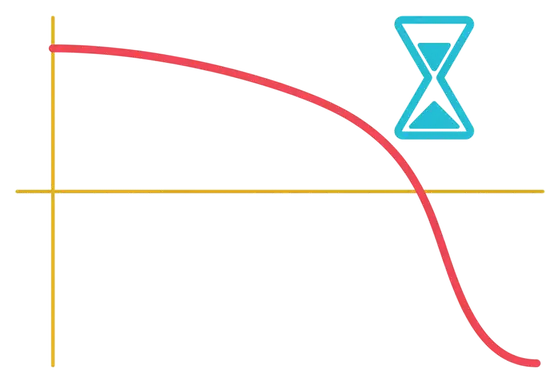
Options have a clock built in: theta, the daily decay of time value. An option loses time value every single day — the 400 of time value in the earlier example doesn't vanish at expiry; it leaks away day by day, faster and faster as expiry approaches. This makes options fundamentally different from the futures positions you've learned: a future's value follows the market; an option's value follows the market MINUS the clock. The consequences are practical. For buyers: time is your cost of doing business — the trade must move in your favor fast enough to outrun decay; a "wait and see" approach that works for futures is a slow bleed for options. For sellers: time is the paycheck — every day that passes without a big move adds to their profit, which is why selling options (with strict risk control!) can be a steady business while buying them is a series of small losses punctuated by occasional wins. Neither is right or wrong — but you must know which side of the clock you're on before every trade.
Options for the futures trader
How do options fit a futures-first trader's world? Three honest uses. Use one: expressing a view with defined risk — buying a call instead of a long future caps your loss at the premium, which can be attractive around high-impact news. Use two: harvesting the clock — selling options on ranges you understand, collecting premium while the market goes nowhere (advanced; requires margin discipline and a stop on the position). Use three: reading the market — options prices are a real-time vote on expected volatility: when the VIX (the index of options-implied fear) spikes, futures traders know a storm is expected and can reduce size or wait. What options are NOT: a way to "buy the market with less money" for the same risk — the premium can expire worthless, and the clock never sleeps. If you trade options in the demo, start with buying calls and puts on liquid instruments, small sizes, defined stops on the premium — and let the payoff diagram in the image above be your mental model for every entry.

Quiz: test yourself
8 questions from the lesson. Tap an answer to check it.
-
You buy a call with strike 30,000 for a premium of 200. The price rises to 30,500. What is the call's intrinsic value?
-
What is the maximum loss of an options buyer?
-
An option loses time value every day. What is this decay called?
-
Which statement about options sellers is correct?
-
What is a put option?
-
The price is 31,000 and a call with a 30,000 strike costs 1,400. What is its time value?
-
A call option is out of the money at expiry. What happens?
-
What does a spike in the VIX tell futures traders?
Educational content only, not financial or investment advice. Trading involves risk; all trading in Trade Dojo uses virtual money. More Futures & Derivatives lessons · All lessons