
Market Basics · Lesson 1 of 40
Trading vs Investing: What's the Difference?
The difference
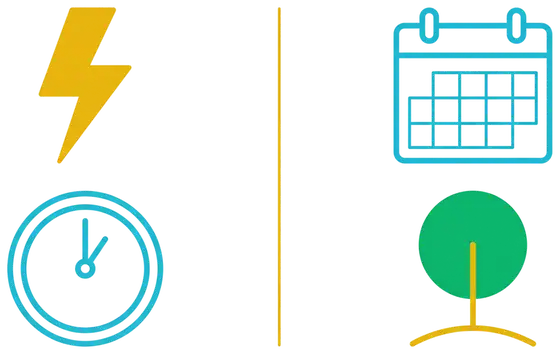
Trading and investing both buy and sell financial instruments, but they answer different questions. An investor asks: "What will this asset be worth in five years?" A trader asks: "What will the price do in the next few hours, days or weeks?" Investors earn from the asset growing over time — and often from dividends or interest on top. Traders earn from the price moving at all: up, down, or sideways, as long as they are on the right side. The instrument itself doesn't have to be "good" or "bad" — a trader can profit from a falling Bitcoin just as easily as from a rising one. Take a concrete case: both an investor and a trader buy at 30,000. The price drops to 24,000 in a month, then climbs to 40,000 over two years. The investor who held through the dip ends up with a 33% gain. The trader who respected a stop loss at 28,000 took a small loss — but was then free to re-enter, short the weakness, or take a dozen other trades in the same two years. That one difference changes everything: what you research, how you decide, when you act. Neither approach is wrong — they're just different jobs with different tools. You're reading this because you want the trader's job.
Time decides everything
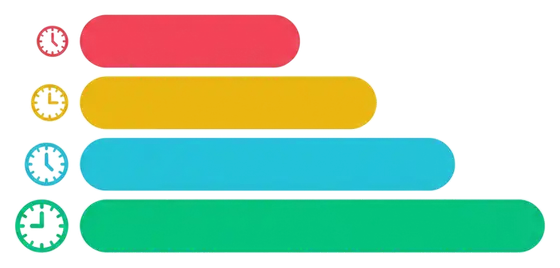
The single biggest difference between traders is how long they hold. Minutes? Hours? Days? Weeks? Months? Each choice creates a different job. A position trader holds for weeks or months, riding one big trend and tolerating noisy pullbacks. A swing trader holds for days, trying to catch a medium wave between two reversal points. A day trader opens and closes everything before the day ends — no overnight risk, ever. A scalper holds for seconds or minutes, collecting tiny moves many times a day. There is no "best" timeframe — there is only the one that fits your life, your patience and your schedule. If you check the app twice a day, swing trading suits you. If you can watch a chart for hours, day trading might. The timeframe also decides which news matters: a scalper ignores the central bank, a position trader ignores the 5-minute noise. And the timeframe decides your tools: a position trader lives on the daily and weekly charts, a day trader on the 5-minute and 1-hour. Everything that follows in this course — charts, levels, risk rules — becomes sharper once you know which timeframe you're trading.
Why people trade
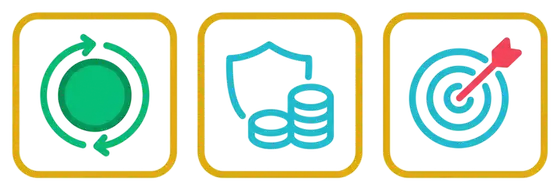
Three reasons pull people into trading. The first is income: you want the market to pay you on a regular basis, and you treat trading as a business. The second is hedging: you already own something — gold, dollars, a company's shares — and you trade to protect its value when prices turn against you. The third is speculation: you see a price move coming and you want a piece of it. All three are legitimate, but they need different strategies, different risk and different knowledge. A hedger and a speculator can take opposite positions in the same market and both be "right" — because they want different things. A gold miner who sells gold futures is hedging; a trader who buys those same futures is speculating; if the price of gold falls, the miner's hedge saved his business while the speculator lost — and both made the correct decision with the information they had. Before you place your first real trade, decide which of the three you are. If you can't answer, you're trading for the fourth reason: entertainment. Entertainment is fine in a demo app — it's expensive on a real account. Write your reason down. It becomes the first entry in your trading journal and the yardstick for every decision later.
Five traits of a successful trader
Successful traders are not the smartest people in the room — they are the most consistent. Five traits show up again and again. 1) They follow a plan: entry, stop and target are decided before the trade, not during. 2) They manage risk first: the question is never "how much can I win" but "how much can I lose". 3) They keep records: a journal of every trade, with screenshots and notes. 4) They treat trading like a business: fixed rules, fixed hours, fixed budget — no improvisation. 5) They accept losses as a cost of doing business. A trader who loses 4 out of 10 trades can be very profitable if the winners are bigger than the losers — say, five 8% winners and four 3% losers net a solid gain even before counting the fifth loser. The one who can't accept a loss usually destroys the account in a single week by moving stops, doubling down and hoping. Notice what's missing from this list: predicting the future. Nobody does that. The best traders just manage probabilities better than everyone else — and the probability game is learned, not born.

Trading is a business
The moment you open an account, you are the CEO of a one-person company. A business has a budget: decide how much capital you can put at risk and never exceed it — money you need for rent, food or family is not capital, it's a liability. A business has costs: every trade pays fees and spread, and those costs are as real as a supplier's invoice. A business has expectations: professionals measure success in months, not days, and a realistic target for a good trader is a positive month, not a doubling of the account. A business has a plan: what you trade, when you trade, and when you stop. And a business reviews its numbers: the monthly P&L, the win rate, the average winner versus the average loser. Most beginners fail not because the market is cruel, but because they run their trading like a casino visit instead of a company. Set your budget now, in writing. If you can't afford to lose the amount you deposit, you can't afford to trade it — that rule protects you better than any indicator ever will.
Tools of the trade
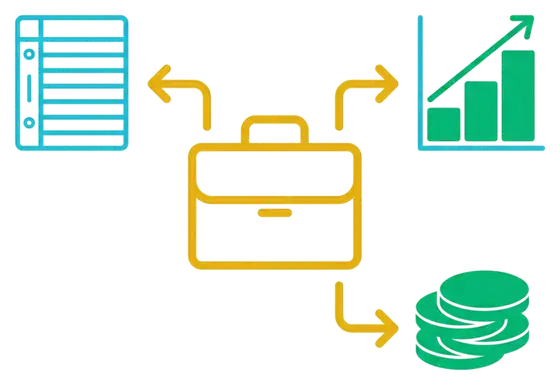
You need surprisingly few tools to start. First, a chart with a few timeframes — the app has this built in. Second, a way to place orders with a stop loss attached — also built in, on the Trade screen. Third, a source of news for the instruments you trade — a free economic calendar covers most of it. Fourth, a notebook — paper or digital — for your trading journal. That's it. Professional terminals, multiple monitors and paid data feeds add speed, not skill. A trader with one phone and a strict plan usually outperforms a trader with three monitors and no plan. Master the basics first: before you buy any tool, ask what decision it helps you make. If the answer is "it looks cool", skip it. Free resources — exchange blogs, chart platforms, economic calendars — cover 90% of a beginner's needs. Open the app now and find the Trade screen: look at where the order ticket asks for your stop loss. Getting familiar with that one screen is the entire equipment list you need for this course.
Quiz: test yourself
8 questions from the lesson. Tap an answer to check it.
-
An investor and a trader both buy Bitcoin at 30,000. The price drops to 24,000 over three weeks, then recovers to 36,000 a year later. Who is more likely to have sold at a loss?
-
Which holding period belongs to a swing trader?
-
A trader has a plan with entry, stop and target — but the price moves against the trade and the plan says to exit. What should they do?
-
You risk 100 USDT on a trade and your account is 5,000 USDT. What percentage of the account is at risk?
-
What does a trader earn from, compared with an investor?
-
A gold miner sells gold futures to protect himself against a falling gold price. What is he doing?
-
A trader loses 4 out of every 10 trades. Can they still be profitable?
-
Which money should never be used as trading capital?
Educational content only, not financial or investment advice. Trading involves risk; all trading in Trade Dojo uses virtual money. More Market Basics lessons · All lessons