
Forex · Lesson 35 of 40
What Is Forex? Currency Trading for Beginners
The biggest market on Earth
The foreign exchange market — forex — is where currencies are traded, and it is the largest financial market in the world: roughly 7.5 trillion US dollars change hands every single day. To put that in perspective, the entire daily volume of all the world's stock exchanges combined is a fraction of that number. The market has no central building — it's a global network of banks, brokers and electronic platforms, open 24 hours a day, five days a week, following the sun from Tokyo to London to New York. Who trades it? Central banks managing their reserves, commercial banks serving corporate clients, international corporations hedging their currency exposure (an importer paying in dollars, an exporter paid in euros), funds speculating on economic trends — and, at the very end of the line, retail traders like you. The retail share of the market is small, but the market is so deep that it doesn't matter: you can trade a million-dollar position in EUR/USD without moving the price a single pip.

Why currencies change value
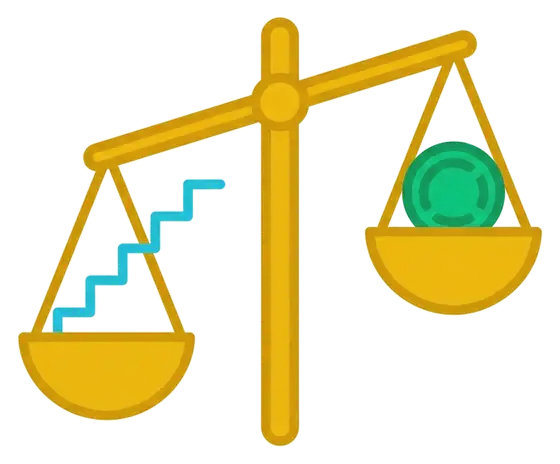
A currency's value is the market's verdict on that country's economy, and the verdict changes every second. The strongest driver is the interest rate differential: money flows toward yield — if the US pays 5% and the Eurozone pays 2%, global capital moves into dollars, and the dollar strengthens against the euro. The second driver is economic health: growth, employment, inflation and trade all tilt the balance — a country exporting more than it imports sees demand for its currency, because foreigners need it to pay for the goods. The third is risk sentiment: in global stress, money flees to the "safe" currencies (the dollar, the Swiss franc, gold's digital cousin); in calm times, it flows to riskier, higher-yielding currencies. And the fourth is geopolitics: wars, sanctions and political shocks can move a currency more in a day than economics moves it in a month. The trader's map of all four: the economic calendar, the rate expectations, and the daily chart — the chart is where all the forces arrive at once.
Pairs: you always trade two currencies
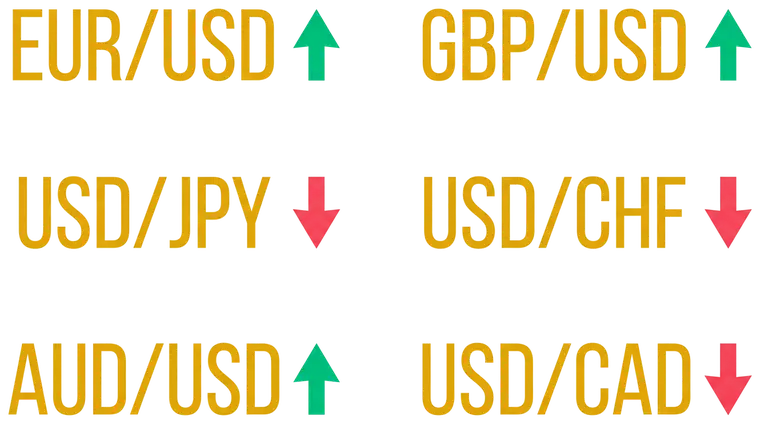
Currencies never trade alone — they trade in pairs, because a currency's value only exists relative to another. EUR/USD is the most traded pair in the world: the base currency (EUR) is the first, the quote currency (USD) the second, and the price tells you how many dollars one euro buys — a quote of 1.1000 means 1 euro costs 1.10 dollars. When you buy EUR/USD, you are simultaneously buying euros and selling dollars; when you sell it, the reverse. The major pairs all involve the dollar — EUR/USD, GBP/USD, USD/JPY, USD/CHF, AUD/USD, USD/CAD — and the crosses (EUR/GBP, EUR/JPY) trade between the others. The pair structure explains why "the euro is strong" is an incomplete sentence: the euro can rise against the dollar while falling against the yen, in the same hour. For a futures trader, forex pairs behave like the currency futures you already met — same charts, same analysis, same risk rules — just with a different ticker on top.
Central banks: the biggest players
The largest and most influential participants in forex are the central banks — the Fed, the ECB, the Bank of Japan, the Bank of England — and they move the market with two tools: the interest rate decision and the words around it. A rate decision is a scheduled event with a known time and a consensus expectation — the surprise is what moves the pair. But the words matter as much as the number: when the Fed's statement turns "hawkish" (worried about inflation, leaning toward higher rates) the dollar rallies even without a decision, because the market prices the FUTURE of rates; when it turns "dovish" (worried about growth, leaning toward cuts), the dollar falls. This is why forex traders watch central bank speeches like futures traders watch inventory reports: the language is the data. The practical rule: know the next decision date of the central banks in your pairs, know the consensus, and know the difference between what was said and what was expected — the surprise is the trade.
Forex for the futures trader
If you've completed the earlier courses, forex holds no new mysteries — only a different wrapper. The technical analysis is identical: trends, support and resistance, patterns and indicators all apply to EUR/USD the same way they apply to BTC or the NASDAQ. The differences are worth listing. Liquidity: EUR/USD is the most liquid market on earth — spreads are razor-thin and slippage is rare, the best environment for learning. Volatility: currencies move in smaller daily percentages than crypto — a 1% day in EUR/USD is a big day — so stops and targets are tighter in percentage terms, and leverage does more of the work. The schedule: the market lives and dies with the sessions — London and New York overlap is prime time, Asian hours are quieter, and weekends are dead. And the drivers: interest rates and central banks dominate, so the calendar is your primary research tool. In the app, open EUR/USD, check the daily trend, mark the next central bank event, and run the same checklist you've used on every instrument — the market will feel familiar, because it is.
Quiz: test yourself
8 questions from the lesson. Tap an answer to check it.
-
EUR/USD moves from 1.1000 to 1.1100. How many pips did it move?
-
Which pair is the most traded in the world?
-
You BUY EUR/USD. What are you actually doing?
-
Which factor is the strongest driver of currency values?
-
EUR/USD is quoted at 1.1000. What does that mean?
-
The Fed's statement turns hawkish. What usually happens to the dollar?
-
In a global crisis, where does money tend to flow in forex?
-
When is the forex market open?
Educational content only, not financial or investment advice. Trading involves risk; all trading in Trade Dojo uses virtual money. More Forex lessons · All lessons