
Forex · Lesson 36 of 40
Forex Pips, Lots and Risks (With Example)
Pips and lots: the units of the game
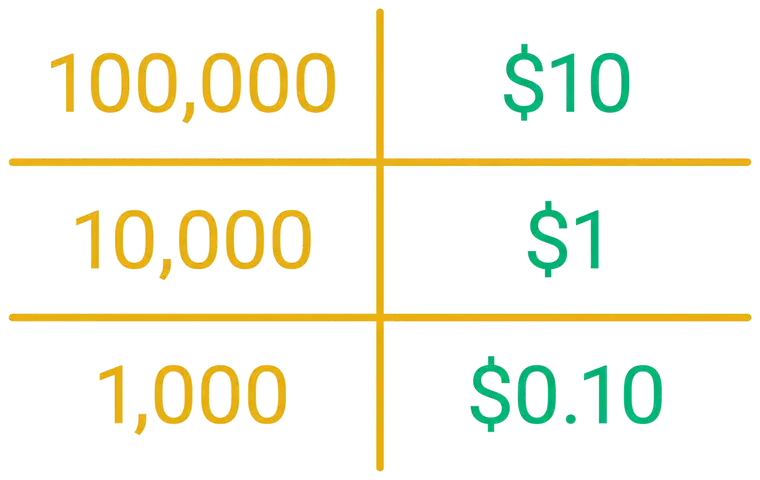
Forex has its own units. A pip is the smallest meaningful price move: for most pairs, 0.0001 — a move from 1.1000 to 1.1001 is one pip; for JPY pairs, it's 0.01. A lot is the position size: a standard lot is 100,000 units of the base currency, a mini lot is 10,000, a micro lot is 1,000. The magic number every forex trader knows: one standard lot of EUR/USD moves exactly 10 dollars per pip — 100,000 × 0.0001. A mini lot moves 1 dollar per pip; a micro lot, 10 cents. This is the arithmetic of every forex trade: a 50-pip stop on a standard lot costs 500 dollars; the same stop on a micro lot costs 5. The pip value is why forex beginners blow up: they see "leverage up to 100:1" and open a standard lot on a small account, without realizing that one ordinary 100-pip day against them is a 1,000-dollar loss. The units are not trivia — they are the risk control, and the position formula from the risk course works exactly the same here: position = risk ÷ (stop in pips × pip value per lot).
Spot, forward, options — the flavors
Forex comes in three wrappers. Spot: the actual exchange of currencies "now" — in practice, two business days later — and the default for retail trading; when you see EUR/USD on a chart, that's the spot price. Forward: an agreement to exchange currencies at a fixed rate on a future date — the corporate hedging tool, customized between banks, and the ancestor of futures. Futures: the standardized, exchange-traded version of forwards — the currency futures you met in the futures course, with fixed sizes and dates. Options: the right to exchange at a rate, paying a premium — the same options logic as the options lesson, applied to currencies. For a retail trader, the practical choice is between spot (via a forex broker) and futures (via a futures exchange): same analysis, different mechanics — spot has no expiry and charges swap/interest on overnight positions, futures have expiry and margin but no swap. The demo app's forex instruments behave like spot: learn there, and the transition to any wrapper is just a matter of reading the contract.

The risks that are real
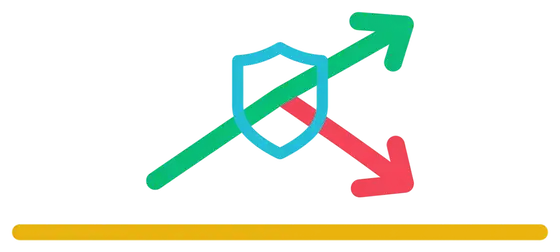
Forex risks are the risks you already know, with forex-specific textures. Leverage is the headline: forex brokers commonly offer 30:1 to 100:1 (some offshore venues, far more — and "far more" is the marketing of disaster); at 100:1, a 1% adverse move is the entire account, and the liquidation math from the futures course applies with no mercy. Volatility around data: NFP, CPI and central bank decisions routinely move majors 50–150 pips in minutes — a standard-lot position moves 500–1,500 dollars in those minutes. The spread: in calm markets EUR/USD trades on a fraction of a pip; in events and dead hours it widens several times, and the market order you place in a panic pays the widest spread of the day. Weekend gaps: the market closes Friday and opens Sunday with a price that can jump through every level while you sleep. And the quiet killer: swap — the overnight interest charged on leveraged positions, small per day, meaningful on positions held for weeks. Every one of these is manageable with the tools you already have: size by the 1% rule, avoid events without a plan, and check the costs before you hold.

Worked example: sizing a EUR/USD trade
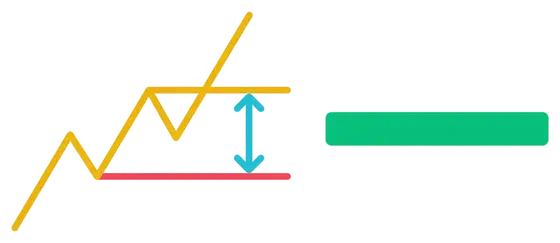
Let's size a real forex trade with the full formula. Account: 10,000 USDT. Risk rule: 1% — 100 USDT. Setup: EUR/USD at 1.1050, support at 1.1030, you decide the stop goes 50 pips below entry. Pip value: one standard lot = 10 dollars per pip. Step one: the loss at the stop for one standard lot = 50 pips × 10 = 500 dollars — five times your budget, so a standard lot is out. Step two: position = risk ÷ (stop × pip value per lot) = 100 ÷ (50 × 10) = 0.2 lots — a mini-lot trader would say 2 mini lots. Step three: check the leverage — 0.2 standard lots = 20,000 notional; on a 10,000 account that's 2× leverage, comfortable and far from liquidation. The trade: buy 0.2 lots at 1.1050, stop at 1.1000 (−50 pips = −100 dollars), target at 1.1150 (+100 pips = +200 dollars) — a 1:2 trade, sized by the formula, protected by the stop. Notice the flow: the chart chose the stop distance, the account chose the risk, and the formula chose the size. That flow is the whole profession.
Hedging: the quiet purpose of forex
Beyond speculation, forex exists for hedging — and understanding the hedgers explains the market's size. A European carmaker selling in the US earns dollars and pays costs in euros: if the dollar weakens, its revenue shrinks. It hedges by selling dollars forward — locking in the exchange rate for its expected revenue, so the business outcome doesn't depend on the currency's mood. An airline buying fuel in dollars hedges the same way. These hedgers are not trying to profit — they're buying certainty, and they're willing to pay the spread for it. For the retail trader, hedging has two honest uses. First, portfolio protection: if you hold a large position in an asset priced in dollars while your life expenses are in euros, a small currency hedge can protect your purchasing power — advanced, but real. Second, and more practically: understanding hedging explains why the market behaves as it does — the corporate flows at month-end and quarter-end, the depth at every level, the way the pair "refuses" to move far without resistance. The hedgers are the market's foundations; the speculators trade on top of them.
The forex routine
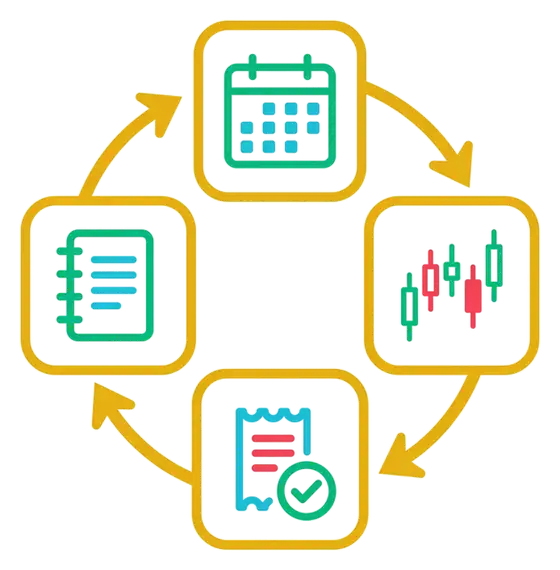
The forex routine is the routine you already know, with the calendar on top. Every session: check the calendar for events in YOUR pairs (the dollar news matters to every dollar pair); check the daily trend and the level map; mark the session's prime time (London–New York overlap for EUR/USD); size every trade by the formula with the pip value in hand; attach TP and SL before entry; and review the week in the journal. The differences from crypto trading are a matter of degree, not of kind: smaller daily moves, thinner weekend liquidity, and a calendar that rules the rhythm. The demo is the place to feel those differences — trade EUR/USD for two weeks with micro lots, and the pair will teach you its habits: the session cycles, the spread behavior, the way it respects the round numbers (1.1000, 1.1100) like invisible walls. By then, forex is no longer "the biggest market in the world" — it's just another chart you know how to read. And that's the whole course, finished.
Quiz: test yourself
8 questions from the lesson. Tap an answer to check it.
-
EUR/USD: one standard lot (100,000 units), one pip = 0.0001. What is the pip value in dollars?
-
Your account is 10,000 USDT, you risk 1%, and your stop is 50 pips on EUR/USD (10 dollars per pip per standard lot). What is the correct position size?
-
What is a pip for most currency pairs?
-
Why do corporations trade forex without speculating?
-
What is one pip for JPY pairs such as USD/JPY?
-
How much does a 50-pip stop cost on one micro lot (1,000 units) of EUR/USD?
-
What is swap in forex?
-
At 100:1 leverage, what does a 1% move against you do?
Educational content only, not financial or investment advice. Trading involves risk; all trading in Trade Dojo uses virtual money. More Forex lessons · All lessons