
Trading Psychology · Lesson 22 of 40
Fear, Greed and Revenge Trading: How to Stop
Fear: the exit that's too early and the entry that's too late
Fear wears two masks in trading. The first is FOMO — the fear of missing out: the market is moving, everyone is talking about it, and the trader who missed the first 10% chases it at the top, entering exactly when the move is exhausted. The second mask is premature exit: the position is winning, but the fear of giving it back is so strong that the trader grabs a tiny profit at the first pullback — and watches the real move run without them. Both masks cost the same thing: the winners never get to be winners. The math of fear is invisible because it never appears on the statement — it's the profit that was never taken. The cure is structural: the target is written before entry, and the exit at the target is executed by the plan, not by the pulse. If the position was worth entering with a target of +3R, it's worth holding through the scary pullback to +3R — the fear is the price of the profit, and the plan already agreed to pay it.
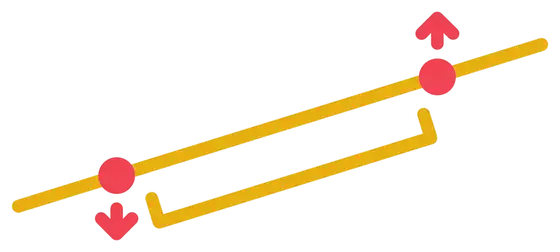
Greed: the "just a little more" that eats everything
Greed is the winner's disease. The trade is at the target, the plan says exit — but the candle looks strong, and "just a little more" sounds so reasonable. The trader moves the target up, holds through the reversal, watches the profit shrink to nothing, and exits at breakeven — or worse, at a loss. Greed has a second form: adding to winners until the position is enormous, so that one normal pullback erases months of small gains. The professional's defense is the written target: the target was chosen when the chart was calm, the level was clear and the R:R was calculated — the market has not improved the target since; only the adrenaline has. The honest test: if you moved your target once, you'll move it again — every time, the market will find a way to take the profit you refused to bank. The winners that got away are not the market's fault; they're the reward you declined. Take the planned profit, and let the NEXT setup be the next trade.
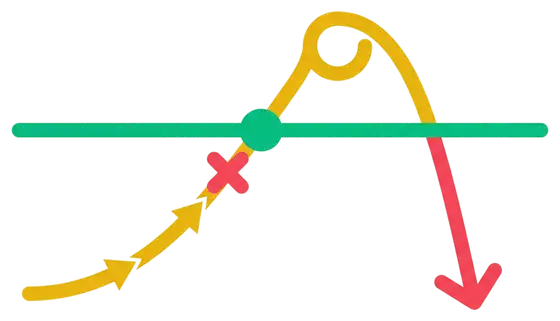
Revenge: the most expensive emotion
Revenge trading is the chain reaction: a loss → the need to get it back immediately → a bigger, angrier trade → another loss → a bigger one still. It's the fastest way to destroy an account, and it's the emotion that most often follows a big loss, because a big loss usually means the trader was already off-plan. The psychology is clear: the revenge trader isn't trading the market anymore — they're trading their pride, and the market collects the fee. The numbers tell the story: a trader risks 1% per trade and loses 300 USDT (3%) by breaking their own rules; the revenge urge says "get it back now", so the next trade risks 10% — ten times the plan — and the market, as it always does to desperate traders, takes it. The account is down 13% instead of 3% — one emotional spiral, four times the planned damage, and a hole that needs a 15% gain to repair. The counter-rule is absolute and simple: after any loss, the next trade is the SAME size, the SAME plan, the SAME rules — or it's no trade at all.
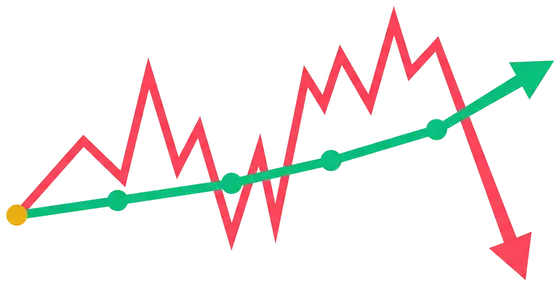
The math of the three
Put the three emotions into one calculation and the lesson becomes arithmetic. The honest expectancy formula: (win rate × average win) − (loss rate × average loss). Fear destroys the average win — winners cut at +0.5R instead of +3R. Greed destroys it too — winners that reach +3R and give it all back become +0R. Revenge destroys the win rate AND inflates the average loss — desperate trades have the worst setups and the biggest sizes. A system with a true edge of +60 per trade becomes −20 per trade when fear halves the winners, greed zeroes them, and revenge doubles the losers. The conclusion is not motivational — it's mathematical: the psychology IS the edge. Two traders with identical systems, identical charts and identical money will have completely different results purely from how they execute — and execution is 100% psychology. That's why the best indicator on your chart is your own journal, and the best signal it can give you is the moment you started breaking your own rules.

The counter-rules
Every emotion has a written counter-rule, and the rules are simple enough to fit on a sticky note. Against FOMO: the market is always open tomorrow; there is no trade that must be taken today. Against premature exit: the target is a number, not a feeling — exit at the target or the stop, nothing in between. Against greed: once the target is moved, the trade is broken — take the profit and walk. Against revenge: after a loss, the next trade is the same size and the same plan, and if that feels impossible, the session is over. Against overtrading: three trades a day maximum, or one — the market doesn't pay by the click. Write your own counter-rules now, in the app's notes or on paper, and review them every morning with the calendar. The rules will be boring. That's the point: boring rules, followed for years, are the entire secret — the excitement was never the business, it was the tax.

Quiz: test yourself
8 questions from the lesson. Tap an answer to check it.
-
A trader planned 1% risk (100 USDT) but a revenge trade risks 10% (1,000 USDT) and loses. What did the revenge trade cost compared to the plan?
-
A system has a 50% win rate, an average win of 100 and an average loss of 200. What is the expectancy per trade?
-
What does FOMO usually cause?
-
The target is reached and the trade is profitable. Greed says "just a little more". The counter-rule is...?
-
A trader who plans to risk 1% loses 3% by breaking the rules, then loses another 10% on a revenge trade. How much is the account down?
-
After any loss, what does the counter-rule against revenge say about the next trade?
-
What is the expectancy formula?
-
Out of fear, winners are closed at +0.5R instead of the planned +3R. What does that damage?
Educational content only, not financial or investment advice. Trading involves risk; all trading in Trade Dojo uses virtual money. More Trading Psychology lessons · All lessons