
Trading Psychology · Lesson 21 of 40
Trading Psychology: How to Manage Emotions
The emotional cycle
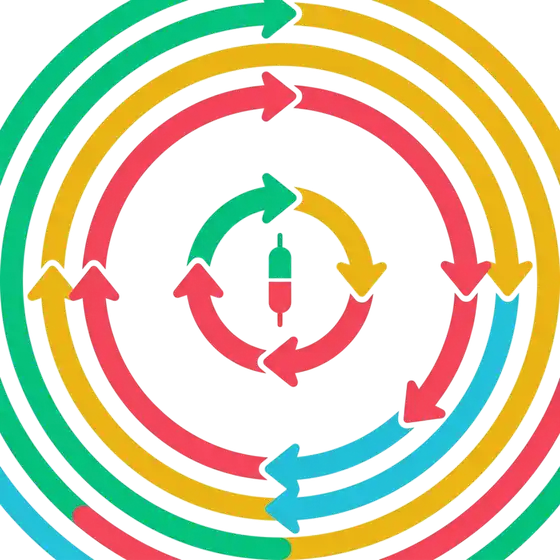
Trading is the only profession where the feedback arrives in your bloodstream before it arrives in your bank account. A winning trade releases dopamine — confidence surges, and the brain starts believing it's invincible. A losing trade triggers the fight-or-flight response — cortisol, tunnel vision, and an urge to DO SOMETHING, right now. The emotional cycle of a trader is predictable: euphoria after wins, overconfidence, then doubt after the first losses, anxiety as they grow, panic at the drawdown, despair — and then, if you survive, a calm, boring return to normal. The power of knowing the cycle is simple: when you can name the stage you're in, you can subtract its influence. Euphoric? Reduce size — the market looks easy exactly when it isn't. Panicked? Close the app — panic decisions are the worst decisions. The emotions don't disappear with experience; professionals just learn to recognize them as weather — something to observe, not something to obey.
Falling in love with a position
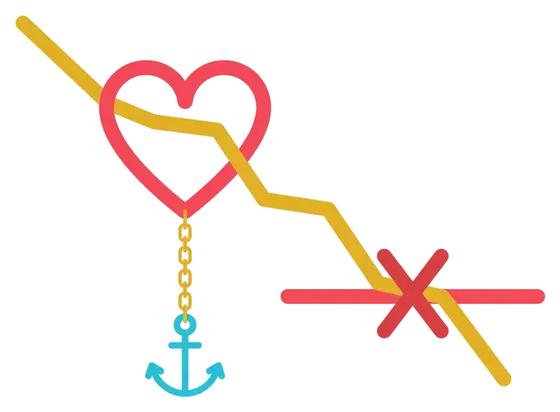
The most expensive romance in finance is the one between a trader and an open position. It starts innocently: the entry price becomes "my price", the trade becomes "my idea", and the chart becomes personal. Then the market moves against the position, and love turns to stubbornness: "it will come back — it has to". The trader who married the position stops seeing evidence: the support that breaks, the trend that turns, the signal that says exit — all filtered out by hope. The cure is a change of identity: a position is not your child, it's inventory. A shopkeeper doesn't fall in love with a box of shoes; when the price drops, they mark it down and move on. The professional's position is a temporary arrangement with the market, renewed only while the thesis holds — and the thesis is written on paper before entry, so that the exit decision was made by the calm version of you, not the desperate one. If you catch yourself saying "my trade", ask: would I open this position today, with fresh eyes? If the answer is no, the exit is overdue.
Trading as a business
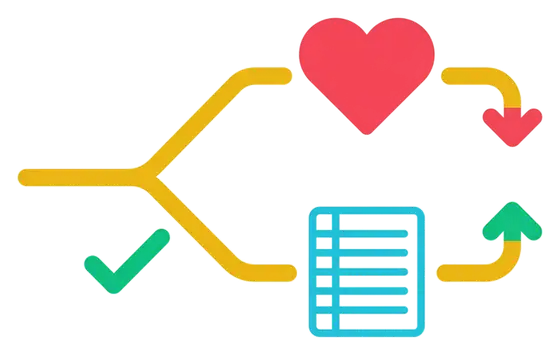
Every lesson about risk management points here: trading must be a business, and businesses run on decisions, not feelings. The business mindset translates emotions into data. Fear is data — it means the position is bigger than your tolerance; shrink it. Greed is data — it means the plan's target is being ignored; the plan wins. Boredom is data — it means you're overtrading; close the app. The business has fixed procedures: the checklist before entry, the stop on every position, the loss limit per day, the review at the end of the week. When a procedure exists, emotion has nothing to grab — you don't decide whether to exit a losing trade, the procedure already decided it. This is why written rules beat willpower: willpower is a feeling that fluctuates; a checklist is a machine that doesn't care how you feel. The trader who treats trading like a business and the trader who treats it like a casino can trade the same setups — and the results will be completely different, because the business runs on process and the casino runs on mood.
After a loss: the pause
The minutes after a loss are the most dangerous minutes in trading. The brain demands compensation, the account demands recovery, and the finger hovers over the order ticket. Every instinct says: trade again, bigger, now. The professional's response is mechanical: nothing. The loss was already budgeted — the 1% rule meant you agreed to this loss before you took the trade, and now the bill has arrived and it's paid. Trading again immediately would be a NEW decision, made by the worst version of yourself, in the worst possible conditions. The ritual: close the chart, close the app, walk away for at least an hour — or the day. Write one sentence about the trade in the journal, then do something unrelated. The market will still be there tomorrow, and tomorrow's version of you will make a better decision. The pause is not weakness; it's the strongest habit in trading, because it's the one that keeps every other habit alive. The trader who cannot pause after a loss doesn't lose once — they lose in a chain, and the chain is what kills accounts.
The invisible opponent is you
Add up the evidence and the conclusion is uncomfortable but liberating: the biggest opponent in your trading is not the market, the broker or the news — it's the trader in the mirror. The market is neutral; it doesn't know your entry price, doesn't care about your losses, and doesn't send you messages. All the drama — the hope, the fear, the revenge — is generated internally, by a brain that evolved for hunting, not for staring at charts. The liberation is that the opponent is trainable. Every habit in this course — the written plan, the fixed risk, the pause after loss, the journal — is a tool for training the internal trader. You don't need to become emotionless; you need to become organized enough that emotions have no steering wheel. Professionals feel the same fear and greed as beginners — the difference is the professionals have procedures that run anyway. Build the procedures in the demo, where the losses are free, and you'll arrive at the real market with the one edge that can't be copied: self-knowledge.

Quiz: test yourself
8 questions from the lesson. Tap an answer to check it.
-
An account falls 10%, then rises 10%. Where is it compared to the start?
-
A trader catches themselves saying "my trade will come back". What is the professional response?
-
Which is the most dangerous moment in trading?
-
What does the 1% rule have to do with emotions?
-
You feel euphoric after a winning streak. What is the professional response?
-
How should a professional think about an open position?
-
Why do written rules beat willpower?
-
You feel fear the whole time a trade is open. What is that feeling usually telling you?
Educational content only, not financial or investment advice. Trading involves risk; all trading in Trade Dojo uses virtual money. More Trading Psychology lessons · All lessons