
Market Basics · Lesson 3 of 40
Long vs Short: Profit When Prices Rise or Fall
Long: buy low, sell high
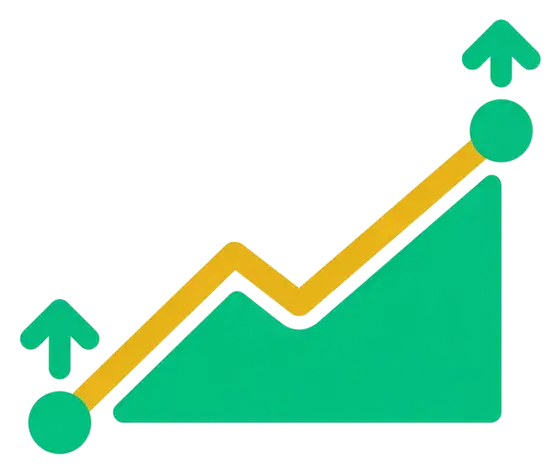
Going long is the classic trade: you buy an asset expecting the price to rise, then sell it higher. Your profit is simply sell price minus buy price (minus fees). On a futures or crypto exchange, "buying" doesn't mean taking physical delivery — your position is a contract on the price, and your profit or loss is settled in cash or USDT. Example: you buy 0.1 BTC at 30,000 USDT and sell at 33,000 USDT. Profit = 0.1 × (33,000 − 30,000) = 300 USDT, minus fees. The maximum you can lose on a long is the amount you invested — the price can't fall below zero. That's the comforting part. The uncomfortable part: you only make money when the market goes up. If the market falls for months, a long trader's only options are to wait, take the loss, or switch to the other side — shorting. And waiting has a hidden cost: capital sitting in a falling trade can't be used elsewhere. Professionals treat a stagnant or losing position as "dead money" — the same capital on the short side, or in a different instrument, might be working for them.
Short: sell high, buy low
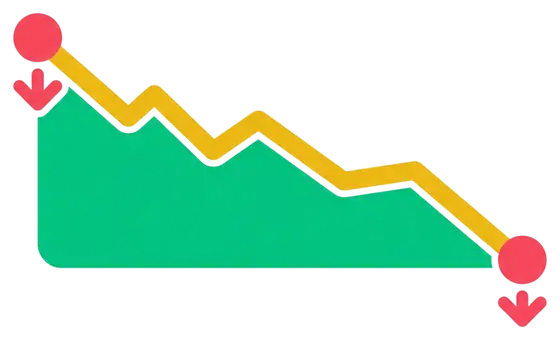
Shorting is the mirror trade: you open a position that profits when the price falls. In stock markets, shorting requires borrowing shares from your broker and returning them later — complicated, and sometimes restricted. On futures and crypto exchanges, shorting is just another button: you open a "sell" position and close it with a "buy". The exchange handles the mechanics; you only care about the price difference. Example: you short 0.1 BTC at 30,000 and buy it back at 27,000. Profit = 0.1 × (30,000 − 27,000) = 300 USDT. Shorting matters because markets don't only go up — in a bear market, shorting is how traders survive and how hedgers protect themselves. It also makes the market more honest: short sellers expose overpriced assets by betting against them, which keeps bubbles smaller than they would otherwise be. The scary part: losses on a short are theoretically unlimited, because price can rise forever — which is exactly why stops matter so much on short positions. A long can always wait for zero; a short must never wait for infinity.
The math is the same
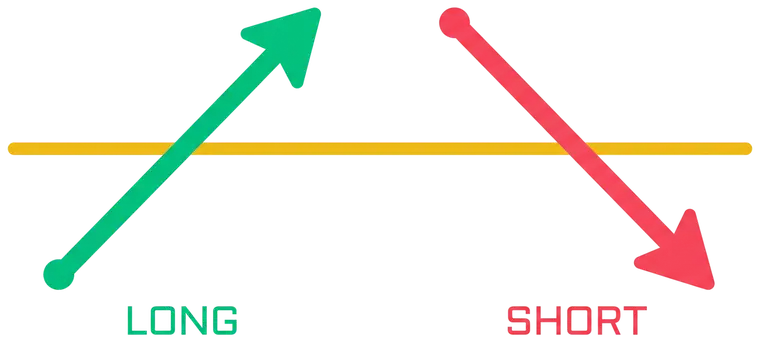
Strip away the emotions and long and short are the same trade in opposite directions. For any position: P&L = size × (exit price − entry price) for longs, and P&L = size × (entry price − exit price) for shorts. Same size, same distance, same money — just mirrored. What changes is your risk profile. On a long, your maximum loss is limited to the size of the position. On a short, your loss is unlimited in theory (price can keep rising). In practice, with a stop loss, both are limited to whatever distance you choose. This symmetry is why the same chart analysis works both ways: a resistance level is a target for a long and a trigger for a short. The same risk:reward math applies: if you risk 100 USDT to make 300 USDT, it doesn't matter whether the setup is a long or a short — the probability of ruin is identical. In the app, practice by opening a small long and a small short on two different pairs — same size, same stop distance — and watch how the P&L moves in opposite directions. The mechanics will feel natural after a few tries.
Worked example: shorting BTC
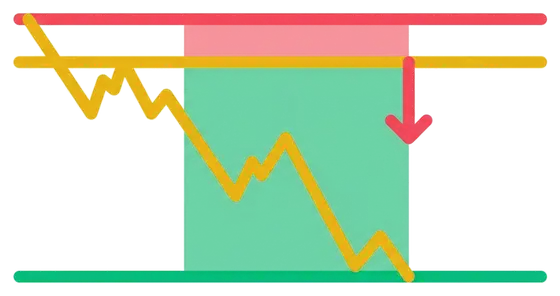
Let's do a full short, step by step, with numbers. Your demo account has 10,000 USDT. You believe Bitcoin is overbought at 30,000 and will drop to 28,000. Decision: short 0.5 BTC — that's a position of 15,000 USDT notional, which your account supports with 2× leverage. Entry: short 0.5 BTC at 30,000. Stop: you place it at 30,600 (2% above entry — your maximum loss is 0.5 × 600 = 300 USDT = 3% of the account). Target: 28,000. If the target is hit: P&L = 0.5 × (30,000 − 28,000) = 1,000 USDT profit, before fees. Risk:reward = 300 : 1,000 = 1 : 3.3. If the stop is hit instead: you lose 300 USDT and move on. Notice the discipline in the setup: entry, stop and target were all decided before you clicked. That's the entire difference between a trade and a gamble. Also notice the leverage choice: 2× on a 10,000 account gives room for the 3% risk to be a comfortable slice of the balance. Try this exact setup on the demo account — even if the market doesn't reach the target, practice the full cycle: open, monitor, close.
Shorts as protection
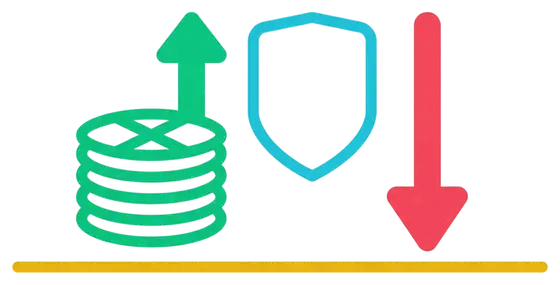
Shorting isn't only for speculators — it's also the tool of protection. Hedging means taking a position that profits when your main holding loses value. A farmer who will harvest wheat in three months fears falling prices, so he sells wheat futures now: if prices fall, his futures profit offsets his crop's lower value. A crypto holder who believes in Bitcoin long-term but fears a crash can short a small amount as insurance: if the market drops, the short's profit cushions the portfolio; if it rises, the short costs a little, but the holdings gain more. Hedging is not about making money — it's about sleeping well and surviving shocks. For you, the practical lesson is simpler: understanding shorts means you can always defend your account. When your analysis says "down", you don't have to sit and watch your long bleed — you can close it, flip short, or simply stay in cash. Flexibility is the trader's real edge, and shorting is what makes the market two-directional instead of a one-way street.
Why shorting feels harder
New traders avoid shorting for psychological reasons, not logical ones. First, our brains are wired for "buy low, sell high" — shorting feels like betting against something, which feels wrong, even though markets don't care about your opinions. Second, losses on a short feel faster: a rising price seems to move quicker than a falling one, because fear is faster than greed. Third, most people have lived through bull markets and treat rising prices as "normal", so shorting during a downtrend feels like swimming against the current — even when the data says the trend is down. The fix is mechanical: treat short setups exactly like long setups. Same rules, same stop distance, same position size. If your strategy says "resistance rejected, short", you don't need to feel good about it — you need to follow the plan. Many traders keep a checklist taped next to their screen that applies identically to both directions: trend, level, confirmation, stop, size, target. The market doesn't know or care which side you're on. It only pays the side with better risk management.
Quiz: test yourself
8 questions from the lesson. Tap an answer to check it.
-
When does a short position make a profit?
-
You short 2 ETH at 1,500 and close at 1,400. What is the profit (no fees)?
-
What is the theoretical maximum loss on a short position without a stop loss?
-
On a futures exchange, what does "shorting" require?
-
You buy 0.1 BTC at 30,000 and sell at 33,000. What is the profit before fees?
-
A resistance level is a target for a long trade. What can it be for a short trade?
-
You short 0.5 BTC at 30,000 with a stop at 30,600. How much do you lose if the stop is hit (no fees)?
-
How should a short setup be treated compared with a long setup?
Educational content only, not financial or investment advice. Trading involves risk; all trading in Trade Dojo uses virtual money. More Market Basics lessons · All lessons