
Market Basics · Lesson 4 of 40
Financial Markets and Exchanges Explained
Five markets, one question
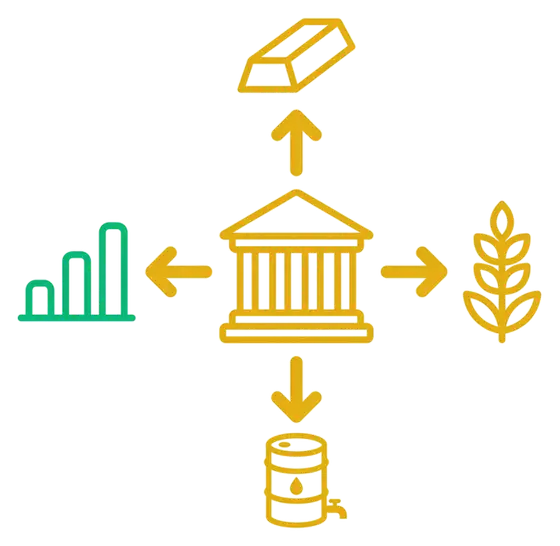
Every financial market answers one question: what is the price of this thing right now? But "this thing" differs. Stock markets price company shares — Apple, Tesla, banks. Bond markets price debt — governments and companies borrowing money; bond prices move inversely with interest rates, which makes them a key signal for every other market: when bond yields rise sharply, growth assets like tech stocks and crypto tend to feel the pressure. Futures markets price contracts on commodities (gold, oil, wheat), indices (S&P 500, NASDAQ) and currencies — you're not buying the barrel of oil, you're trading the contract on its future price. Options markets price the right to buy or sell something later, and crypto markets price digital assets around the clock. As a futures-first trader, your home is the futures market — but you'll constantly read signals from all the others: when bond yields rise, crypto and stocks tend to feel it. The markets are not separate worlds; they're one giant machine with many dials, and moving one dial moves all the others.

How an exchange works
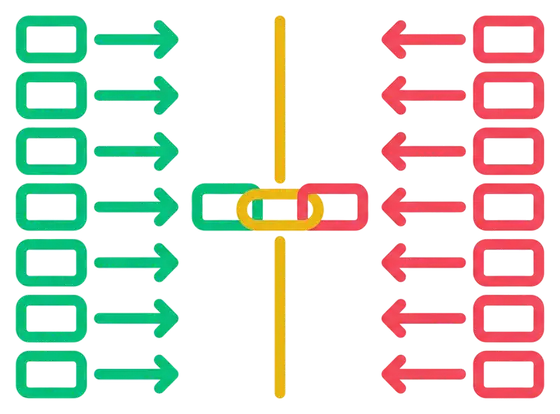
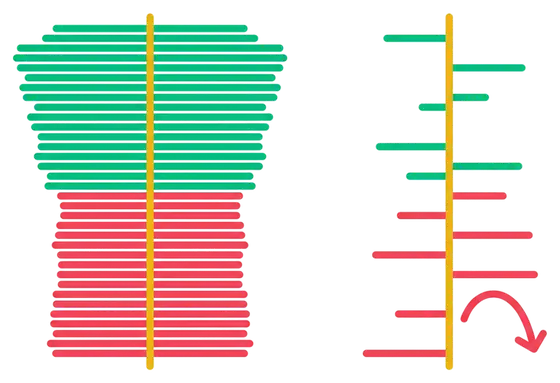
An exchange is a marketplace with rules: it matches buyers and sellers, publishes prices, and guarantees that trades settle. The NYSE and NASDAQ are the famous stock exchanges — the NYSE with its floor and specialists, NASDAQ fully electronic. The key concept to understand is the auction: at any moment there are people willing to buy at a price (bids) and people willing to sell at a price (asks). When a buyer's bid meets a seller's ask, a trade happens. The current price is simply the last trade. Concretely: if the best bid for ETH is 2,950 and the best ask is 2,951, the spread is 1 USDT — buy with a market order and you pay 2,951; sell and you receive 2,950; that 1 USDT is the cost of instant execution. This is why "the market" is not a single entity — it's thousands of participants with different opinions, and the price is the running compromise between them. Exchanges also publish the order book — the list of pending bids and asks — which professionals watch to gauge supply and demand at each level. You don't need to read an order book to start, but knowing it exists explains a lot: big walls of orders can hold a price at a level, and their removal can trigger sudden moves.
Futures exchanges: the CME
The biggest futures exchange in the world is the CME Group in Chicago. It lists everything from crude oil and gold to the S&P 500 (ES), NASDAQ (NQ), interest-rate contracts and Bitcoin futures. A futures contract is standardized: one ES contract = $50 × the index, one gold contract = 100 troy ounces, one BTC contract = 1 or 5 BTC depending on the venue. Standardization is the point: anyone trading an ES contract knows exactly what they're trading, so liquidity pools in one place and prices are fair and tight. Futures trade nearly around the clock, with a daily maintenance break — which is why futures traders can react to news instantly, unlike stock traders waiting for the exchange to open. The contract's expiry date matters, too: a futures price converges toward the spot price as expiry approaches, which is why traders either close or roll their contracts before the date. For a demo trader, the practical takeaway: futures give you leverage, shorting, and near-24/5 access to stocks, indices, commodities and crypto — all with the same order ticket.
Crypto exchanges: no middleman
Crypto exchanges are a different animal: there is no central building, no floor, no government guarantee. Trading happens 24/7, 365 days a year, directly on the exchange's matching engine. This has real consequences. Good news: you can trade Bitcoin at 3 AM on a holiday, and you can short anything as easily as you can buy it. Bad news: if the exchange is hacked or mismanaged, there is no safety net — the famous collapses of 2022 cost users billions. For the trader, the important part is what the exchange offers: spot markets (buy and hold actual coins), futures (leveraged contracts), and perpetuals (futures without expiry, the most popular crypto product of all). Perpetuals are especially relevant for this app: they combine futures-style leverage with the simplicity of never worrying about an expiry date. The demo app you're using mimics exactly this environment — same order types, same leverage, same liquidation mechanics — so that when you go live, nothing about the interface surprises you. The difference between demo and live is not the platform. It's your money.

Liquidity: the invisible force
Liquidity is how easily you can buy or sell without moving the price. A liquid market — BTC/USDT, EUR/USD, gold futures — has thousands of orders at every level, so your trade fills instantly at a fair price. An illiquid market — a small altcoin, a thin futures contract — has few orders, so your trade either waits or eats through the book, paying a worse price. Slippage is the name for that cost: you wanted to sell at 1.0000 and the order filled at 0.9980 because there wasn't enough liquidity. In a quiet market the spread on EUR/USD might be 0.1 pips; on a tiny altcoin it can be several percent. Liquidity also explains market behavior: liquid markets trend smoothly and respect levels; illiquid ones spike, gap and get moved by single large orders. Beginners should trade only liquid instruments for the first year: BTC, ETH, the major indices, gold, the big forex pairs. The demo app is a great place to feel the difference — trade a major pair and a tiny altcoin and watch how differently their charts behave around the same news.
When does the market move
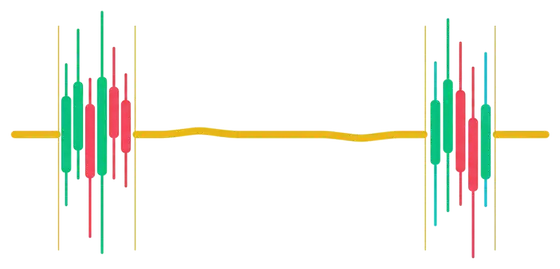
Most of the day, markets drift. The real moves happen in windows: at the open and close of the major sessions, and around scheduled news. For crypto, the volatility map follows the same rhythm — the biggest candles often appear when US markets open and during high-impact news (CPI, Fed decisions, jobs reports). For futures, the cash-open of the underlying market matters: the S&P futures move most when the NYSE opens. What should you do with this knowledge? Three things. First, don't fight dead hours: an order placed into thin liquidity gets bad fills and fake breakouts. Second, know the week's calendar: mark the high-impact events and decide in advance whether you'll trade through them or step aside — both are valid, but the decision must be conscious. Third, never hold a leveraged position through an event you're not prepared for; a 3% overnight gap can wipe a 20× position before you wake up. The app's economic calendar is your early-warning system — check it before you place any trade that will outlive the hour.
Quiz: test yourself
8 questions from the lesson. Tap an answer to check it.
-
Where would you trade a contract on the future price of oil?
-
What does the current price of an asset represent?
-
A market has very few orders at each price level. What happens when you place a large sell order?
-
An ES contract is worth $50 × the S&P 500 index. If the index is at 5,000, what is one contract's notional value?
-
The best bid for ETH is 2,950 and the best ask is 2,951. You buy with a market order. What price do you pay?
-
What is a perpetual contract?
-
What tends to happen to growth assets like tech stocks and crypto when bond yields rise sharply?
-
As a futures contract approaches its expiry date, what happens to its price?
Educational content only, not financial or investment advice. Trading involves risk; all trading in Trade Dojo uses virtual money. More Market Basics lessons · All lessons